Tuesday, June 30, 2015
Dear Mr. Henshaw
Cleary, B. (1983). Dear Mr. Henshaw. NY: Morrow. Cleary wrote this fictional work as a series of letters to the
narrator’s favorite author; Mr. Henshaw. The letters never sound forced though, even as
Leigh complains about being forced to answer the author’s questions. It sounds
completely conversational. Leigh just wants someone to talk to and listen to
what he has to say. Mr. Henshaw asked Leigh to keep a diary, but he was very
hesitant at first. He even wrote a letter asking for advice on how to start
keeping a diary. He had to pretend to be writing to Mr. Henshaw in order to
start it because it felt too weird. Girls, on the other hand, would have
quickly jumped at the idea of keeping a diary, something private and personal. Through
his letters and diary entries, the reader can see that Leigh is really
struggling with some serious emotional issues. His parents got a divorce, he
moved to another school, and his dad and dog are gone. Those are a lot of
changes for a young person to experience all at once. Readers can certainly relate to the problems that Leigh is facing and the need to talk to someone who isn't their parent especially when their parents are the ones causing the emotional roller coaster.
Skulduggery Pleasant
Landry, D. (2007). Skulduggery pleasant. NY: HarperCollins. Stephanie Edgley's famous writer uncle has just passed away, and she has inherited his house and royalties. She was one of the only people who could relate to her uncle, but this was still a bit shocking considering she was only twelve-years-old. At her uncle's funeral, Stephanie notices an odd man lurking around. This man becomes a recurrent figure as she also sees him at her uncle's house, at the reading of the will, and then again at the house as he saves her life from an intruder. Skulduggery and Stephanie believe that her uncle was murdered and set off to find his murderer only to discover that they have a bigger problem on their hands. Nefarian Serpine wants to take over the world, or better yet, end it. Stephanie must decide what she wants to do with her life; leave her old life behind or join Skulduggery and conquer evil. Landy has a way with words, and too often it seemed that the language he used was a mirror image of Skulduggery's persona. This will definitely catch reader's attention with so many fantastical elements such as magic and good versus evil.
We Are the Ship
Nelson, K. (2008). We are the ship. NY: Hyperion. This informational book provides readers with a look into the lives of African-Americans and how they were able to participate in baseball and organize the Negro League Baseball. It offers readers information from how the Negro League Baseball came to be, what games were like, what life was like if you were a ballplayer, league owners, the greatest players in the Negro League, and so much more. Kadir Nelson ingeniously organized
this book into nine innings, just as if it were an actual baseball game. Nelson includes several colorful, full-page photographs of prominent people in the Negro League Baseball.
Hitler Youth
Bartoletti, S. (2005). Hitler youth. NY: Scholastic. In this informational text, Bartoletti offers readers a different perspective into a historical time; Hitler's reign. This text shows readers what life was like for young boys and girls during Hitler's coming to power. It shows how they loyal they were to Hitler and how they contributed to his "success". It also informs readers of what life was like after Hitler's fall from power. This is an incredibly informational text that offers readers different ways of looking at this time period; timeline, an abundance of photographs, quoted sources, and an extensive bibliography.
Balloons Over Broadway: The True Story of the Puppeteer of Macy's Parade
Sweet, M. (2011). Balloons over Broadway: The true story of the puppeteer of Macy's parade. This informational texts provides readers with an insight into the life of the puppeteer that engineered the Macy's parade; Anthony "Tony" Fredrick Sarg. He loved figuring out how things moved since he was a young child and even impressed his father by letting chickens out of their coop without ever leaving his bed. As he grew older, he created marionette's and perfected their movements. When he move to New York, Macy's asked him to create a window display. What he created awed people, so Macy's gave him another task. On Thanksgiving Day 1924, Macy's held it's first Thanksgiving Day parade. It was such as success that they decided to make it an annual tradition; a tradition that has grown over the years. Tony is also responsible for the huge floats that appear in the parade. The illustrations in the book are cute and eye-catching for readers of all ages.
It's a Book
Smith, L. (2011). It's a book. NY: Roaring Brook. In today's technology rich society where kids are overly exposed to computers, iPads, and smart phones, a book is a rare novelty. It's a Book questions what an ape holds in his hand. His friend asks, "Hey, what's that?" The ape responds, "It's a book." His donkey friend continues to question him by asking but where's the mouse, how do you scroll down, how do you blog, and other questions to which the ape always replies, "It's a book." It's a cute story with so many dimensional shapes composing the actual illustrations throughout the book.
The Three Pigs
Wiesner, D. (2001). The three pigs. NY: Clarion. This is a retell on the classic version of The Three Little Pigs. It begins similarly with the three pigs collecting materials to build their own houses and then actually building their houses out of straw, sticks, and bricks. As the wolf visits the first pig, he blows the house down with so much force that the first little pig is actually blown out of the story. The wolf is dumbfounded. The same thing happens with the second little pig. This is quiet a twist from the original version. The reader will be pleased with the illustrations and the graphics worked into this text. Although the book plays off of the original tale, this story is unique and entertaining especially since a new character is introduced.
Out of My Mind
Draper, S. (2010). Out of my mind. NY: Atheneum. Melody narrates the story of her life and the complications she must
face every day because she has cerebral palsy. She cannot talk, she is in a
wheelchair, and everyone looks at her as if she is some freak of nature. Most
people do not think she is remotely intelligent, but that is not the case.
Melody’s life at school is a little complicated. She often gets frustrated for
being left out and not being able to do things like the other kids can. Even
going to the bathroom is a hassle. When Melody finally is able to communicate
through the aid of a computer, things don’t drastically change for the better.
People are still hesitant to let Melody participate. She is constantly being
doubted and ridiculed by her teacher and peers. Melody struggles a bit with
self-acceptance because of this constant harassment, but eventually she learns
that she is who she is, and that’s just fine. The reader has an inside look at how ignoring or intentionally isolating or singling out a person with disabilities can be hurtful. The reader can also see how Melody overcame her obstacles and proved to be both brave and strong despite how disappointed and angry she really felt.
Rules
Lord, C. (2008). Rules. NY: Scholastic. Catherine is frustrated with her routine and wants more attention than she is getting from her parents. She has an autistic brother, and
it is easy to see through her dialogue with him and her constant references to
her daily life including the rules she sets for David, that it is not easy for
her to deal with David’s autism. Catherine likes to tag along to David's occupational therapy sessions, so she can have some alone time with her mom. It is at one of those appointments that she meets Jason, a boy who was severely injured in an accident and ended up in a wheelchair and without the ability to speak. During this time, Catherine also gets a new neighbor who is her age. Kristi is automatically cool and popular, and Catherine wants to fit in with her. This prompts Catherine to hide the truth about Jason from her which hurts Jason's feelings. Catherine realizes that what she did to Jason is what so many people do to David on a daily basis. This prompts her to grow-up and realize that being a true friend means accepting people for who they regardless of their disabilities. This is a theme that many readers struggle with on a daily basis. Sometimes people unknowingly isolate people with disabilities. This book allows readers to see how people can change with time and how hurtful it is to ignore and be ashamed of people with disabilities.
Good Masters, Sweet Ladies
Sclitz, L. A. (2007). Good masters, sweet ladies. Boston, MA: Candlewick Press. Each character in this book delivers a monologue in which
they show readers their social status and roles in society. They also describe the
situations they must deal with on a daily basis. Each chapter is
connected to the prior one which allows readers to feel like they are reading a
whole story instead of just bits and pieces of peoples’ memories on a subject
or time period. The topics that are covered in this book are still very real in today's world which in turn allows readers to relate to the characters in the text. Some of the topics that are covered are being afraid of not getting married and wanting a better life for oneself.
Schlitz provides some useful background information in between a couple of
chapters which I believe allow readers to make a more thorough connection with
the text.
Primates
Ottaviani, J. (2013). Primates. NY: FirstSecond. This comic-book like informational texts shows how Jane Goodall, Dian Fossey, and Birute Galdikas decided to become involved in their field of study as well as everything they went to in order to become who they are today; distinguished scholars in their field of study, primatology. The comics are cute and easy to follow; the stories of each of these women is heart-warming and eye-opening. This book is likely to inspire young readers to pursue their dreams regardless of how silly they may seem to other people.
Wonderstruck
Selznick, B. (2007). Wonder struck. NY: Scholastic. This is a story of two seemingly similar characters who are worlds apart but come together; Ben and Rose. Ben is forced to live with his aunt after his mother dies. He has never met his father and realizes that he would like to know who he is. He finds a cryptic message as he is going through one of his mother's books; a message he is sure is from his father. Determined, Ben leaves his aunt's home and ventures off in search of his father. Along his journey, he encounters a lady named Rose who begins to tell pieces of her own story as well as pieces of what set Ben on his quest; how his mother and father met, who his father was, and what happened to him. Rose has a similar story in which she leaves her home for American in search of an actress that she follows closely; an actress who we find is actually her mother. Ben and Rose are a lot alike, and as their stories are told intermittently, they eventually come together. This is a beautiful story which could be really appealing to readers because of the issues that it covers; the longing for love and family and wanting to know an unknown or absent parent.
Gregor the Overlander
Collins, S. (2004). Gregor the Overlander. NY: Scholastic. In Gregor the Overlander, Gregor longs for his father who has been missing for more than two years. He longs for a sense of being normal and doing the things he likes, but he ends up taking care of his sister since his mom needs to work most of the time. Gregor goes through a shaft which his sister fell into in an effort to find her. The readers discover that the shaft has taken both Gregor and Boots underground in a land with huge cockroaches, bats, and rats. As he befriends a couple of these animals, Gregor, who finds himself the subject of a prophecy, finds his missing father and makes his way back home. This fantasy novel is pretty much out of the ordinary. For some reason, it reminds me of Alice in Wonderland, but a lot more gruesome.
Bridge to Terabithia
Paterson, K. (1972). Bridge to Terabithia. NY: Crown. A young boy,
Jesse, who is considered an outcast at school
befriends a young girl, Leslie, who is also looked at as an outcast at school. The
two create a magical world in which they can escape their lives and act like
royalty. Unfortunately, Leslie dies one day as she tries to cross the overly
full creek in order to get to Terabithia and ultimately the storyline takes us
to what Jess gained with Leslie’s friendship and what he gained and lost after
she died. Because he is the only boy in his own family, a lot is expected from
him culturally. His parents believe that he should be stronger than his
sisters, and this proves to be the case when Jess saves May Belle after
Leslie’s death. Jess is a wonderful character who faces many obstacles in his life. Even though he might have every reasons to give up on life, he faces it bravely and does the best that he can in each situation.
A Big Guy Took My Ball!
Willems, M. (2013). A big guy took my ball! NY: Hyperion. This is a cute story about a small pig who tells his bigger, elephant friend that a BIG GUY has stolen his newly found ball. The elephant, outraged that big guys have all the fun, sets off to demand the BIG GUY return the ball to his friend. What he finds is that the BIG GUY is a REALLY BIG, BIG GUY, so he scampers away afraid of the size of the guy. As he is discussing this with his friend, the BIG GUY - a whale - shows up to thank them for finding his ball. He then breaks down and says that no one will play with him because he is so big. The three decide to invent a new game and play together. Willems keeps the book nice and simple, but it is definitely something readers can relate to. A Big Guy Took My Ball teaches readers that size isn't everything; looks can be very deceiving.
My Teacher is a Monster
Brown, P. (2014). My teacher is a monster. NY: Little, Brown Books for Young Readers. Bobby has a problem at school; his teacher, Ms. Kirby who he believes is always mad and yelling, and therefore, a monster! Ms. Kirby did not allow Bobby to go to recess because he had thrown an airplane in class. After school, Bobby loved going to the park, but one day he ran into the monster at the park. He was shocked. As the day passed, he learned that Ms. Kirby really wasn't as big of a monster as he had suspected her to be. Brown does an excellent job of writing about a topic that most readers can relate to. Everyone has a teacher that they believe is a monster, at least attitude wise. This book opens the door and allows readers to explore the possibility that perhaps not everyone is what they first seem to be.
Me...Jane
McDonnell, P. (2011). Me...Jane. NY: Little, Brown Books for Young Readers. Me…Jane tells the story of
Dr. Jane Goodall in the form of a narrative. It informs readers of Goodall's love of nature and animals, especially chimpanzees. Growing up Jane had a toy chimpanzee named Jubilee which inspired her future work with chimpanzees. This is a heart-warming tale that can inspire children to believe in their dreams because according to Dr. Goodall's story, dreams really do come true.
It's So Amazing
Harris, R. (1999). It's so amazing. Boston, MA: Candlewick Press. This is an informational book that informs readers about eggs, sperm, birth, babies, and families. It is broken off into several chapters which include a chapter on the famous "birds and the bees", women's body parts, men's body parts, what sperm does, and several others. It is incredibly illustrated to match of the informational pieces which makes it a bit comical at times and a lot easier for younger readers to understand and of course, be interested in these topics especially since these can be a bit embarrassing from time to time.
Comics Squad: Recess!
Holm, J. (2014). Comics squad: Recess! NY: Random House. This book consists of a series of comic-like stories that center around a common setting; recess. As most kids believe, recess is the best time of the day, so kids imaginations run wild with the possibilities of what could happen during recess. This book shows a lot of imagination and can help trigger readers' own imagination. Students will surely get a laugh out of these.
Timmy Failure
Pastis, S. (2010). Timmy Failure. NY: Candlewick Press. Timmy is a typical child and what appears to be a bit of a goofball. He is the owner of a detective company called Failure, Inc. which was then renamed Total Failure, Inc. so that his partner's name could also be on the business. By the way, his partner is a fifteen-hundred-pound polar bear. Together, him and Total (the polar bear) go on missions to try to solve "crimes" like who stole Gunnar's Halloween candy. Their business name gives away the outcome of most of their adventures. Pastis is a wonderful writer. This book is definitely appealing to young readers as they explore Timmy's character and his adventures. This book includes comical illustrations as Timmy narrates his own story.
The Watsons Go to Birmingham
Curtis, C. P. (1995). The Watsons go to Birmingham, 1963. NY: Delacorte. Based on the Birmingham Church Bombings, Curtis provides readers with a narrative account of what happened on that gruesome day. Readers experience the complications of a family who lives in Michigan much to their mother's chagrin since she was raised in Alabama. From the beginning, readers get a sense of a nice family with a couple of common problems including a young boy who is up to no good. Byron, the oldest of the Watson's three children, keeps getting himself into trouble; he keeps lighting matches and setting things on fire, he steals from the grocery store using his parent's signatures as a deposit, and he dyes his hair and straightens it. The Watsons decide that Byron needs to be punished especially since their constant attempts at "setting him straight" have all failed, so they have decided that Byron will go spend the summer with Mrs. Watson's mother, Grandma Sands. The real trouble begins when the Watsons get to the South where "blacks" are not as welcome as they are in Michigan. The worst part is when they experience the church bombing that killed four little girls. Luckily, the Watsons are okay, but the experience shoo them to their core. Curtis includes an Epilogue at the end of the narrative in which he addresses the real Birmingham Church Bombings and how they impacted the African American culture and society.
The Graveyard Book
Gaiman, N. (2008). The graveyard book. NY: HarperCollins. Nobody (Bod) Owens wasn't born in a graveyard, but it came to be his home after a killer mercilessly killed his family and attempted to kill him as well. He would have killed him too if the residents of the graveyard hadn't intervened and provided him protection. After that unfortunate night, the Owens become Bod's parents, and Bod is granted "Freedom of the Graveyard" in which he is allowed to roam through most of the graveyard safely. Bod manages to get himself into some trouble along the way like when he leaves the graveyard without permission to try to buy a headstone for Liza. Towards the end, Bod reunites with a girl who used to visit him when he was younger (around 4 or 5). The girl, Scarlett, encountered a man named Mr. Frost who was the same person who killed Bod's real parents, and he could still not let go of the fact that Bod had escaped. He was still after Bod; in fact, he needed to kill Bod in order to stop a prophecy from being fulfilled. Bod, with the help of his friends and the skills he learned by living at the graveyard, was able to beat the Jacks. At the end, Bod, out of danger's way, leaves the graveyard to start a fresh, new life. This is definitely a fantasy novel which engages the reader. Though it seems a little bit strange that someone would live in a graveyard, the storyline makes it believable especially when you add all the questionable elements that can only be found in fantasy novels like ghosts, demons, and a fiery pit.
Spiders
How They Croaked: The Awful Ends of the Awfully Famous
Bragg, G. (2011). How they croaked: The awful ends of the awfully famous. NY: Walker. Bragg does an excellent job of providing a little bit of historical background to how several famous people "croaked" or died with a mixture of facts and dry humor. A few of the lucky (or unlucky, dead?) famous people who made the list are Christopher Columbus, Cleopatra, George Washington, and Edgar Allan Poe. O'Malley does a wonderful job of pairing his illustrations with Bragg's insightful pieces. Children will be more willing to read about these pieces of information in a comical format like this one instead of in a matter-of-fact biography.
Rapunzel's Revenge
Hale, S. (2008). Rapunzel's revenge. NY: Bloomsbury. A beautiful princess grew up in an enormous villa with who she believed was her mother. As she played in her garden everyday, she wondered what was beyond the castle walls. Every time she asked her mother, her mother would tell her not to worry about it and that one day everything she owned would belong to Rapunzel. Despite her wealth and lack of necessity, Rapunzel felt lonely and like something was missing in her life. One day, she finally decided to climb the wall and what she discovered pained her. The queen was not her real mother; Rapunzel longed to go with her real mother, but the queen did not agree, so she locked her up. Rapunzel manages to escape from her imprisonment, and with the help of a friend, she shows strength and courage through every obstacle she faces. Rapunzel's character is one that readers can relate to as she longs for love and fitting in. The theme of this graphic novel is also one that young readers can relate to; at the end love conquers all, even power.
The Paperbag Princess
Munsch, R. (2012). The paperbag princess. NY: Annick Press. Princess Elizabeth is happy because she is supposed to marry Prince Ronald until a dragon shows up, burns down her castle and clothes, and kidnaps the prince. Elizabeth is livid. She searches everywhere for something to wear but only finds a paper bag which she immediately puts on and chases after the dragon. When she arrives at the dragons chamber, the dragon is tired and asks her to return the next day, but Elizabeth sees this as an opportunity and outsmarts the dragon causing him to be all "fired-out" and exhausted. She goes on to save Prince Ronald who is upset that she does not look like a beautiful and clean princess. Princess Elizabeth calls Ronald a bum and leaves him. The illustrator uses dark tones to show when Elizabeth is angry and brighter hues to show when she is joyful. This book allows teachers to teach young readers that life is not always what it seems and that even young girls can conquer the fieriest dragons.
A Crooked Kind of Perfect
Urban, L. (2009). A crooked kind of perfect. NY: Houghton Mifflin Harcourt. Zoe is a typical 10-year-old girl who wants attention from her preoccupied parents; her mother is always busy with work and her father is too paranoid to do normal things. She has dreams; she wants to be a pianist because she is inspired by Vladimir Horowitz. She wants to play at Carnegie Hall and be watched with anticipation by many. Instead of getting her a piano, her father buys her an organ. Zoe is disappointed and feels her dreams are shattered. As she endures the pain of playing the organ and prepares for the Perfectone Perform-O-Rama, Zoe learns that the organ isn't as imperfect as she thought it was, and that's just perfect for her. Zoe kind of grows throughout the book from wishing for something so grand and being disappointed by its lack of arrival to realizing that there are more ways to be perfect; one single idea or instrument does not define perfection. Teachers could use this to show how life has a way of surprising us with the unexpected and how even a disappointing experience can turn into a wonderful one.
Mirror Mirror
Singer, M. (2010). Mirror, mirror. NY: Dutton. Singer does an excellent job of providing two perspectives to classic fairy tales such as Cinderella, Sleeping Beauty, Rapunzel, and Little Red Riding Hood. In Cinderella's fairy tale, for instance, readers get to experience how Cinderella felt when she was locked up with no chance of attending the ball with her stepsisters. We also get to see how she felt when she got her chance to be at the ball with the prince, and how the tables turned; instead of her waiting to dance with the prince, now her stepsisters were the ones who were waiting for their chance. Josee Masse follows each tale with a beautiful mirror image for each perspective that the author offers readers. This colorful and beautifully illustrated book with its twist on fairtales provides teachers a wonderful resource to teach point-of-view.
Monday, June 29, 2015
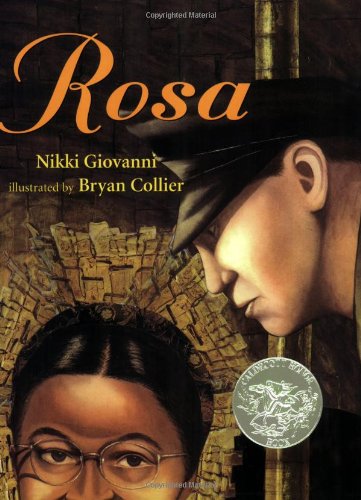
Rosa
This is Not My Hat
Klassen, J. (2012). This is not my hat. Boston,
MA:
Candlewick. A small fish swims around the ocean telling the reader that the hat he is wearing does not belong to him; instead, it belongs to a bigger fish who he claims will never find him or the hat he stole. He claims that only one person knows where he is, but that certain someone swore he would never tell anyone where he was going. As the small fish arrives at the place where the plants are "big and tall and close together", the bigger fish is right on his tail. The book ends with the bigger fish swimming out of the big and tall plants with his hat on and then a close up of the "big and tall and close together" plants. This book is a wonderful way of showing younger children that they should not do something that is wrong even if they think no one knows what they have done.
Tuesday, June 23, 2015
Love That Dog
Creech, S. (2001). Love that dog. NY: HarperCollins. Jack is a student in Miss Stretchberry's class in which they are studying poetry. Jack is reluctant to write poetry claiming only girls write poetry and he has nothing to write about. As time passes and Miss Stretchberry's reads different poems to her class, Jack becomes more enthused about poetry and begins writing more and more of his own poems and allowing his teacher to share them on the board. At the end, he is inspired by W. D. Myers and uses it as a basis for one of his poems. He follows the structure and format, but uses his own topic; his yellow dog. This is a wonderful book to read with students who are reluctant of reading poetry; it will allow them to see that sometimes something you think you will always hate can actually become one of your passions.
Wednesday, June 17, 2015
Where the Wild Things Are
Sendak, M. (1963). Where the wild things are. NY: HarperCollins. One night Max dressed up in a wolf suit and was up to no good; he even threatened to eat up his mother, so she sent him to his room without any supper. As Max went to live out his punishment, his room turned into an enormous forest that was surrounded by an ocean. He took a boat made especially for him in order to go to where the wild things are. Little boys are supposed to be afraid of wild things, but Max was not, so they made him king of all wild things. All the wild things, including Max, did as they pleased and cooked up some mischief until Max was tired and sent everyone to bed without their supper. Max realized he was lonely and wanted someone to love him, so he returned home much to the chagrin of the wild things. When he returned home, he found a nice, warm supper waiting for him. Sendak filled this book with wonderful illustrations of the mischief Max cooked up.
Olivia
Falconer, I. (2009). Olivia. NY: Atheneum. Olivia is good at a lot of things, especially wearing people out. She is always up and about and has a younger brother who likes to copy everything she does. Olivia likes to do certain things on certain days; when it is sunny, she likes to go to the beach and bask in the sun; when it is raining, she likes to visit the museum and stare at her favorite painting. But even though Olivia keeps her mommy busy and wears her out, her mommy still loves her anyway. Ian Falconer uses a lot of black and white throughout the book. The only splashes of color are mainly to show readers the actions that Olivia is doing such as dressing up, getting sunburned, or painting a picture. Overall, this is a wonderful book that can teach children that even though their parents sometimes get after them and may get frustrated with them, they still love them and would do anything for them.
Subscribe to:
Posts (Atom)